2017: A year in review
We share some of the good news stories and achievements of the past year
Before R U OK? announces our plans for the year ahead, we wanted to pause and reflect on the year that was.
2017 was an incredible year for R U OK? – with national awareness and
participation in the campaign continuing to grow. The simplicity and
effectiveness of our four conversation steps - Ask R U OK?, Listen, Encourage
action and Check in- has continued to build the capacity of Australians to support
those struggling with life.
Here are just a few of our good news stories and achievements in 2017:
The Conversation Convoy:
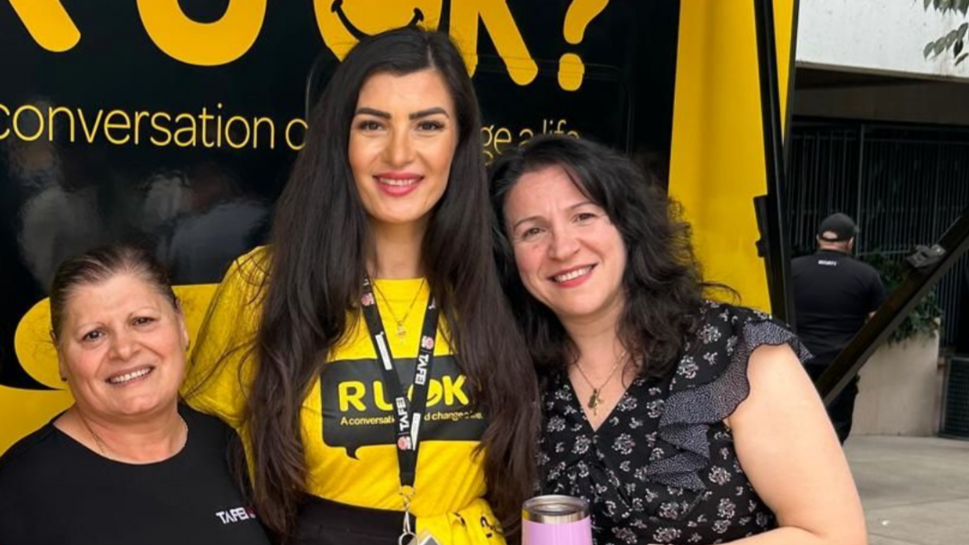
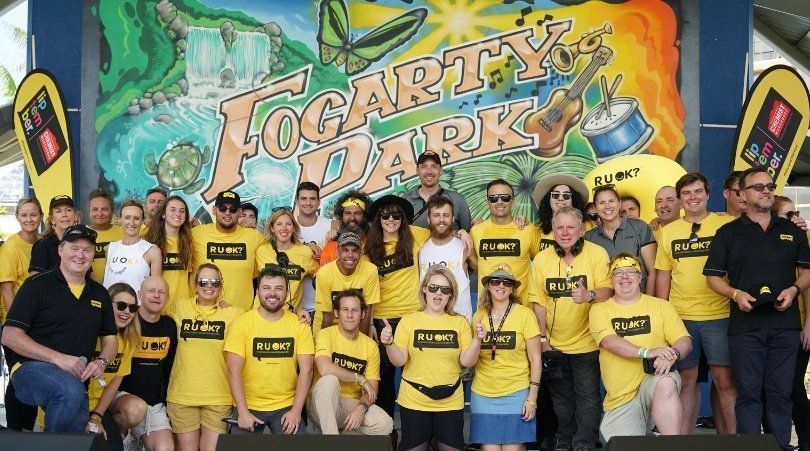
We travelled 16,000 km across Australia on the Conversation Convoy. We visited every state and territory and hosted events in 22 communities to show Australia we’ve all got what it takes to ask R U OK? and support those struggling with life.
Here are some highlights from that journey:
New R U OK? regional and
remote campaign:
There’s are plenty of positive aspects about living and working outside Australia’s larger towns and cities, but it also has its unique challenges. Fewer services, natural disasters, isolation and loneliness are just some of the things that can be harder to deal with in rural communities. There can also be a ‘toughen up’ culture where it’s not always easy to talk about the things that keep us awake at night, or give us the confidence to ask a mate if everything is ok. To help address this, R U OK? developed new resources to encourage conversations in regional and remote Australia. These include:
·The Mateship Manual , a practical guide on how to help someone who’s doing it tough
·New community service television commercials designed to encourage people to trust their gut instinct and ask the question
Primary school video:
Something we're never too young to learn is that asking, "are you ok?" can make a difference - and it's a message R U OK? took into primary school classrooms in 2017 via a music video. The video encourages children from Kindergarten through to Year 6, to comfort their friends when they’re feeling a bit sad or doing it tough.
Watch
it now:
New workplace campaign:
R U OK? developed a new workplace campaign to encourage people to trust their gut instinct and start a conversation with a colleague they’re worried about. Many of us spend a lot of time at work and can be well positioned to notice if one of our colleagues isn’t quite themselves. The new resources encourage workmates to reach out and support their peers.
Download them here.
The One Million Challenge:
Quentin our quirky question mark travelled across the country issuing over 13,000 conversation challenges designed to get Australians reconnecting with their loved ones in the hope of starting one million conversations.
See highlights from the journey here.
Rail R U OK?Day:
In partnership with TrackSAFE, we celebrated the third and biggest Rail R U OK?Day, reaching a massive 14,000 rail employees. This is an increased reach of 75 per cent since the inaugural Rail R U OK?Day in 2015. The initiative even went international, with New Zealand embracing the campaign for the first time.
Find out more here.
New partnerships:
We welcomed our new Principal partner, The Liptember Foundation, and support from:
·The Flight Centre Foundation
·Connor Menswear
·The Audi Foundation
·The Lendlease Foundation
·and a number of trusts and foundations.
R U OK? is also extremely grateful for our longer term partners, including:
·The Australian Government
·Hungry Jack’s
·Virgin Mobile
·Sensis
The support of these organisations, and all our financial supporters and partners, allow us to reach more Australians and take the message further.
New Ambassadors:
We welcomed a number of new Ambassadors lending their voices and experience in support of R U OK?, including:
·Commando Steve Willis
·Casey Donovan
·Dan Conn
·Annalise Braakensiek
·and many more.
We’re so grateful to our Ambassadors who give their time freely and enable us to show more Australians how to initiate life-changing conversations.
New social channels:
We focussed on reaching new audiences on different social platforms, launching:
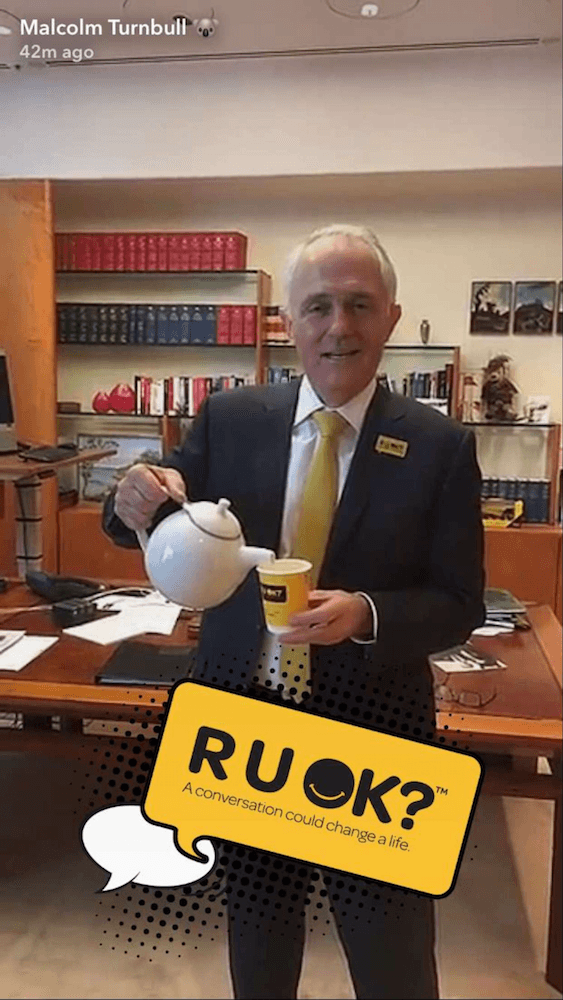
-Snapchat videos and a national filter. The filter had over 204,000 uses making it one of the best ever performing filters in Australia.
-Ambassador Bianca Dye and our Conversation Think Tank chair Kamal Sarma launched our ‘Thanks for Asking’ podcast.
-Our new Facebook messenger Chatbot ALEC provided a more interactive way of learning the four steps to asking R U OK?
Australian Story feature:
On Monday 4 September, Australian Story aired ‘Beyond OK’ showing how six years after R U OK? Founder Gavin Larkin's death, those involved with R U OK? are still guided by his memory and legacy, moving forward.
Increased community support:
More community events and physical challenges than ever before helped spread the message in a meaningful way. The financial support of our donors and fundraisers will allow R U OK? to develop new campaigns and resources in 2018.
Renewed focus on Aboriginal and Torres Strait Island communities:
Suicide is one of the most common causes of death among Aboriginal and Torres Strait Islander people. This prompted R U OK? to renew our focus on increasing peer-to-peer support and meaningful connections within this community. In 2017 we participated for the third year in the Garma Festival’s Youth Forum and developed a solid media partnership with NITV/SBS.
Renewed focus on the LGBTQI community:
Australia’s LGBTQI community has suicide rates well above the national average. In 2017 R U OK? focussed on encouraging the community to check in with friends and family who may be struggling. R U OK? participated in Mardi Gras with its first float, we teamed up with Federation Square for the International Day Against Homophobia and Transphobia and shared real stories, like Craigs. Our work saw us nominated for an Australian LGBTI Award.
People are often surprised that R U OK? only has 8 staff members. With such a
small team, much of our capacity to succeed can be attributed to the goodwill
of our partners, supporters and community.
Everything we are able to achieve is strengthened by significant generosity and
support.
Importantly, R U OK?’s capacity to develop campaigns and resources that are
effective, safe and empowering, owes much to our evaluation work with Colmar Brunton and the incredible expertise we
receive from our Scientific Advisory Group, Conversation Think Tank and our
Creative Hub. Thank you to these individuals who volunteer their time and add
substance, depth and credibility to R U OK?’s work.
We would also like to thank R
U OK?’s Board
for
their support and guidance.
2018 is a significant milestone for our organisation and 13 September will be
the 10th R U OK?Day.
We look forward to a year where we will continue to
inspire more Australians to have genuine life-changing conversations and move
closer to our vision of a world where everyone is connected and protected from
suicide.
Here’s to smashing that goal!