2016: The year that was...
We’re on the final stretch toward the end of another year. As we reflect on what R U OK? has achieved these last 12 months we feel this one has really flown by!
R U OK? has had an amazing 2016 with both participation in the campaign and our impact continuing to grow. We’ve seen a significant increase in the number of Australians who are confident in their ability to reach out to a friend or loved one who’s struggling with life. It’s a great result and a testament to our founder Gavin Larkin’s vision.
Our seventh national day of action, R U OK?Day , saw Ambassadors, communities, sector partners, government and corporate Australia reconnect with someone they’ve lost touch with.
To highlight the power of reconnection, R U OK? reunited three pairs of long lost friends. We captured each pair’s story to show the difference friendship, support and quality time with those we care about can make.
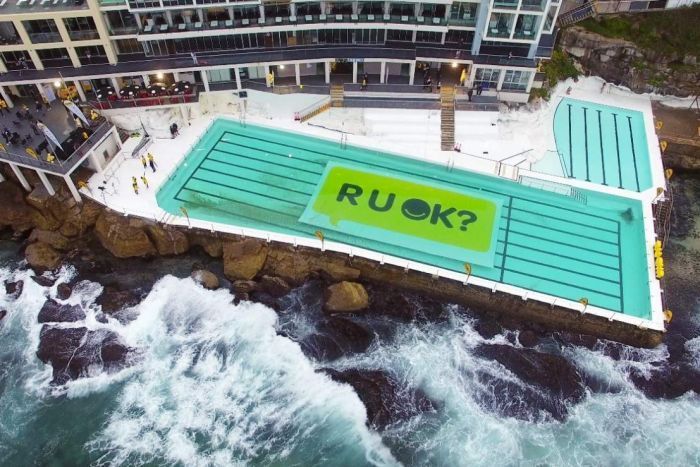
Thousands of R U OK?Day events were held in all corners of Australia with 5,900 media reports helping to highlight the importance of conversations and connecting with those around us. The day featured a breakfast event at iconic Bondi Icebergs where guest speakers, politicians and musicians came together to share messages of promise and hope for a future where we are all connected and protected from suicide.
We've captured more stories and successes from the day, in the R U OK?Day 2016 Wrap Up:
Here are just a few more of our good news stories and achievements in 2016:
- The launch of the R U OK? at Work campaign, ‘ Would you say something?’ to remind people that we've all got what it takes to start a conversation with someone we're worried about.
- A new website developed with the support of our digital partner Sensis to deliver a helpful and inspiring platform for anyone looking to start a conversation with someone they’re worried about.
- Thanks to the support of Bristow we launched the R U OK? Afield campaign ‘It’s not always obvious’ reminding us sometimes we need to trust our gut instinct and dig a little deeper because it’s not always obvious when someone’s struggling.
- With the support of 12 law firms we delivered the Look Deeper campaign to encourage greater peer to peer support across the legal profession.
- In partnership with the TrackSAFE Foundation we delivered the second Rail R U OK?Day to empower everyone in the rail industry to check in with one another and ask, “are you ok?”.
- We supported Ambassador DJ Tigerlily’s ‘Summer of Love’ tour and encouraged youth across Australia to share the love and support one another.
- We expanded our community Conversation Corner initiative (a park bench activation) with a launch in Bundaberg, Queensland supported by R U OK? Ambassador Libby Trickett.
- Our merchandise grew in popularity and helped us reach more Australians in households, workplaces and schools.
- We partnered with the Royal Adelaide Show and the inaugural Ride Against Suicide to encourage South Australians to support one another and connect people with services that can assist when times are tough.
- We launched an interactive question mark ‘Quentin’ who is currently travelling across Australia inspiring one million conversations in the lead up to R U OK?Day 2017.
- A new play was developed called ‘Being Brave’ from our schools’ partner Brainstorm productions to encourage children to talk about what they’re feeling and ask one another, “are you ok?”.
- A new partnership with the Chamberlain Foundation will see us deliver a primary school initiative in 2017
Everything we are able to achieve is underpinned by significant generosity and goodwill.
People often express surprise that R U OK? is a small team of six. While this keeps us incredibly busy, much of the team’s ability to succeed is driven by the incredible commitment of everyone who's helping us build a national conversation movement such as event organisers, employers, employees, volunteers and fundraisers. They inspire us to work harder every day.
The pro-bono support and vital financial support of partners such as the Australian Government , Hungry Jack’s , Virgin Mobile , Bristow Helicopters and Sensis helps us expand the campaign throughout the year.
This year we were privileged to garner the support of a number of new dedicated Ambassadors. Our Ambassador program continues to thrive and we are grateful to all our Ambassadors that give their time and energy to the cause.
Importantly, R U OK?’s capacity to develop campaigns and resources that are effective, safe and empowering relies on the incredible expertise we receive from our Scientific Advisory Group, Conversation Think Tank and Creative Hub. These individuals provide their time freely and add substance, depth and credibility to R U OK?’s initiatives.
I would also like to thank R U OK?’s Board for their support and guidance.
Finally, thank you to the incredible R U OK? team, who consistently kick goals – Katherine Newton (Campaign Director), Anastasia Symons (Campaign Manager), Lisa Minner (Media and PR Manager), Lindy Hodgson (Community Engagement Manager), and Kristina Lawrence (Project and Events Manager). I also want to acknowledge the support of Amy Godfrey during the busy months in the lead-up to R U OK?Day.
We recently bade farewell to Rebecca Lewis, whose vision, creativity and drive has helped R U OK? achieve so much. Her outstanding contribution will be sorely missed.
As we move into 2017, we look forward to a year where we will continue to equip more Australians to reach out and start a conversation with anyone struggling with life.
In the meantime, enjoy the festive season and have a wonderful break filled with meaningful conversations. See you in the New Year!