School Shout Outs
Stuck for ideas on how to bring the R U OK? message to life in your school community? Need some yellow-themed inspiration? Check out the activities and events that schools from across Australia have implemented to encourage meaningful connection with their students and staff.
For more tips and free resources to use in classrooms, visit our Education page.
Brisbane Water Secondary College - Umina
We’re constantly inspired by the incredible ways school communities share our message, not just on R U OK?Day, but any day.
In September 2025, Brisbane Water Secondary College Umina Campus was awash with yellow as students and staff came together to raise awareness.
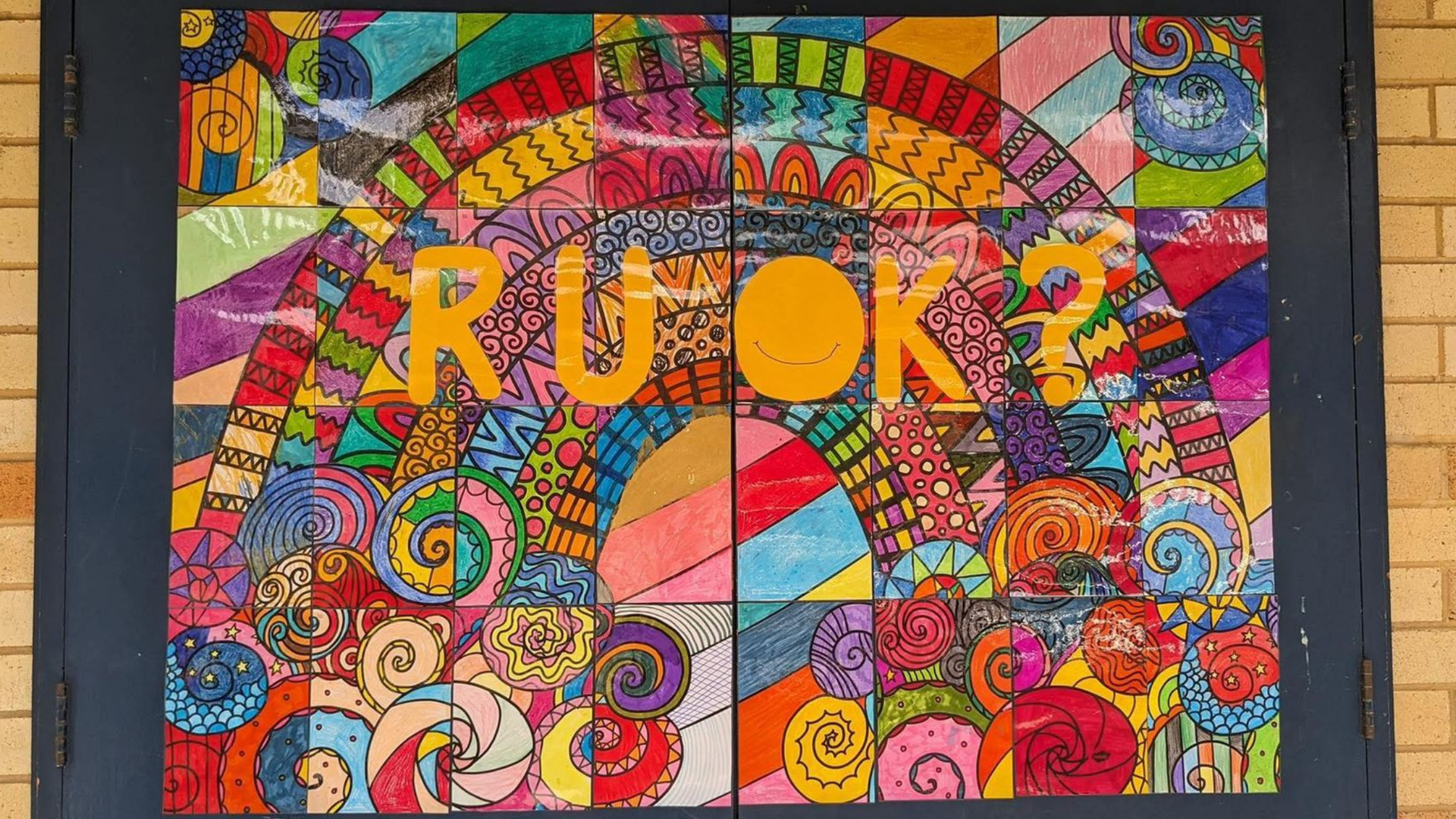
The school hosted a free BBQ, embraced a 'splash of yellow' theme, and created a vibrant, student-designed mural, showing the positive impact of wellbeing initiatives.
Create your own mural with our Mural Builder.
Brigidine College - Indooroopilly
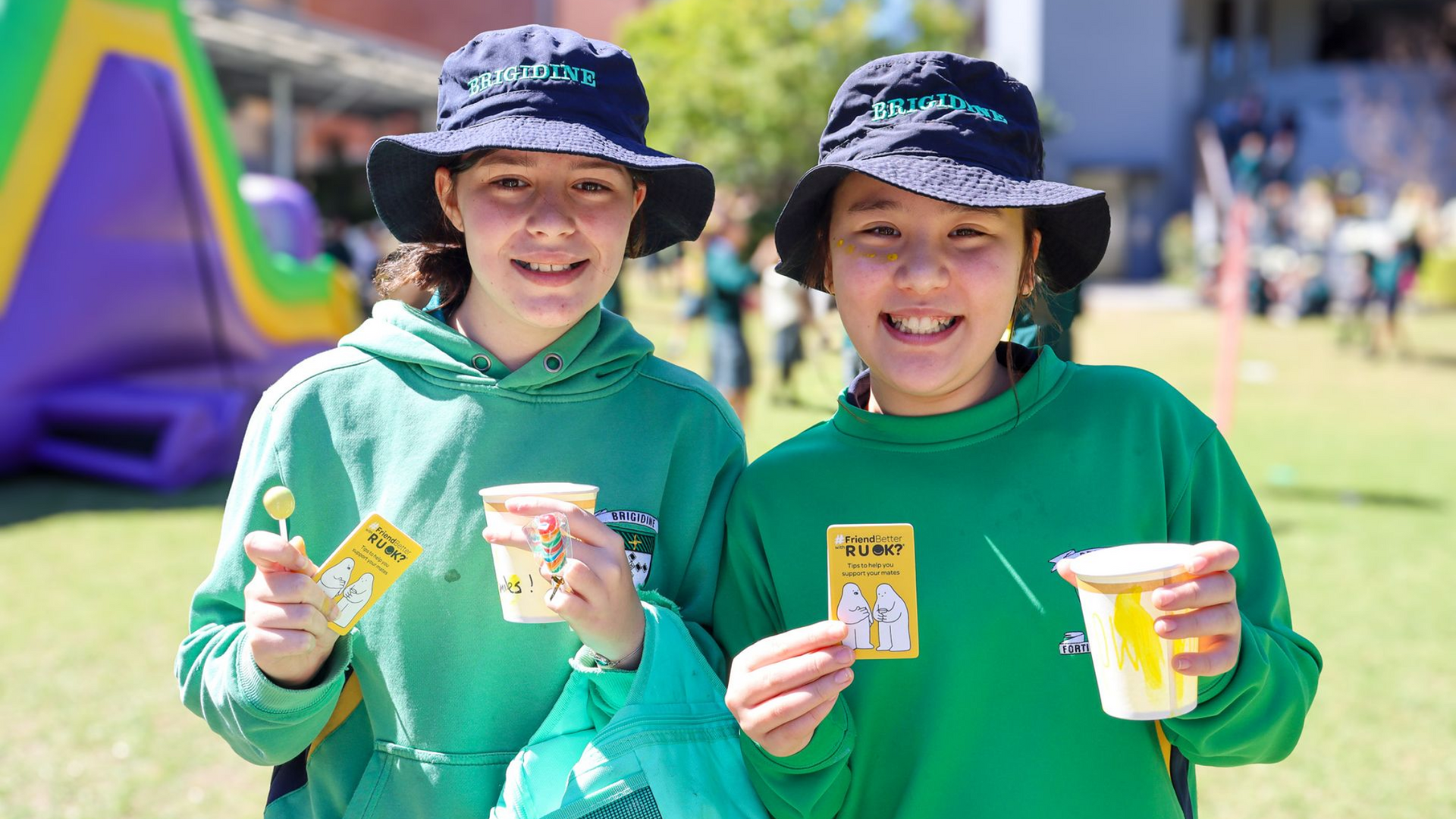
The day began with a morning walk before school, followed by first break activities.
These included an inflatable obstacle course, pledging with thumbprints on the school’s
‘Ask R U OK? Any Day’ canvas, and students sharing yellow cups of drink with handwritten affirmations on them.
Frederick Irwin Anglican School - Mandurah
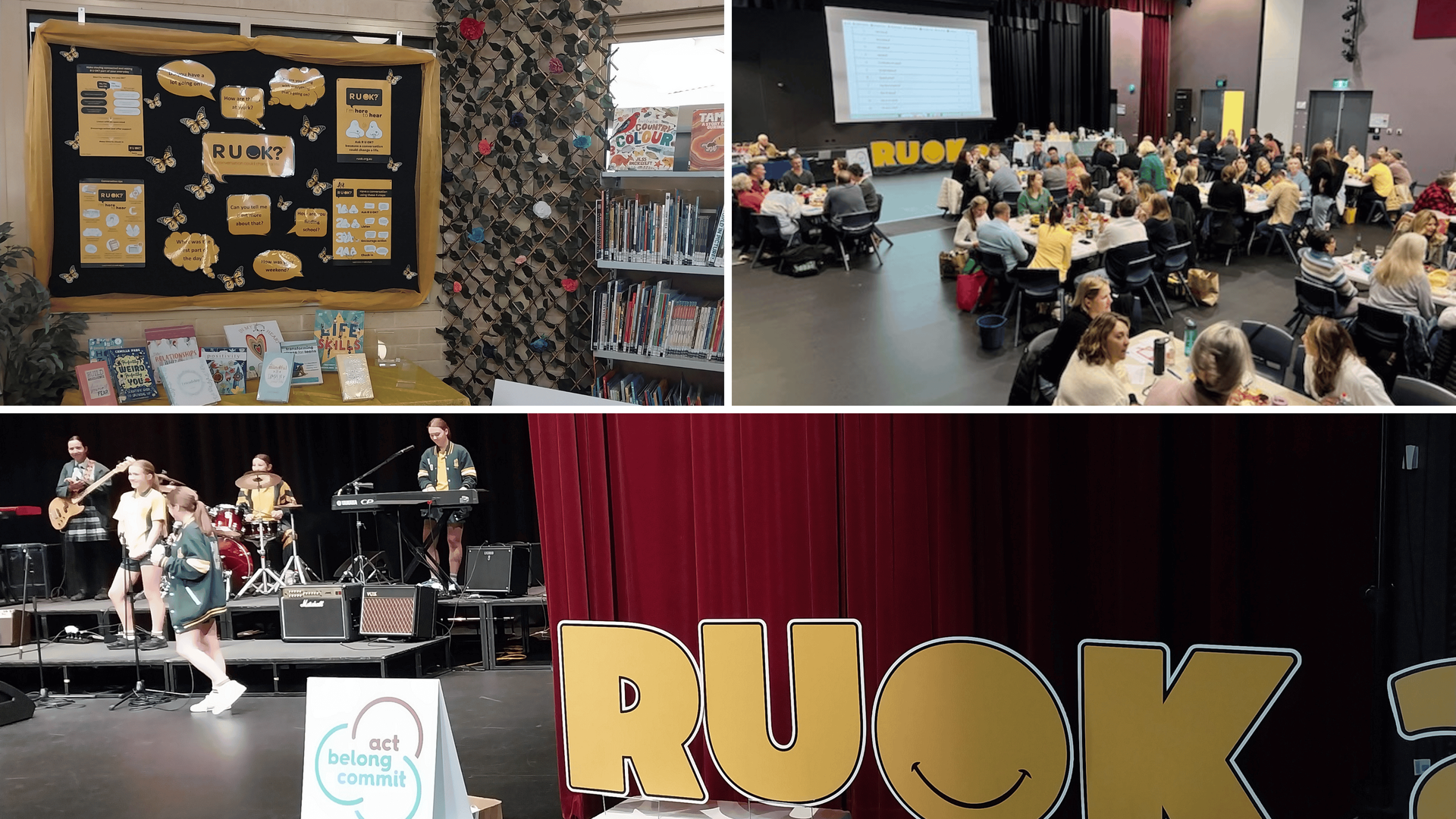
Teachers were encouraged to use R U OK? lesson plans in the lead up to and on R U OK?Day.
Staff and Students were encouraged to wear yellow on R U OK? Day. The school canteen sold a selection of ‘yellow’ food across the week.
A very successful student-led lunchtime music concert was held at the secondary campus.
Social media was used to share the R U OK? messages, across the school Facebook and Instagram accounts. The school held a staff belonging event, as well as a fun Staff Quiz night.
The school’s Wellbeing Dog, Pocket, wore his special coat to help further spread the R U OK? message.
Warrnambool College
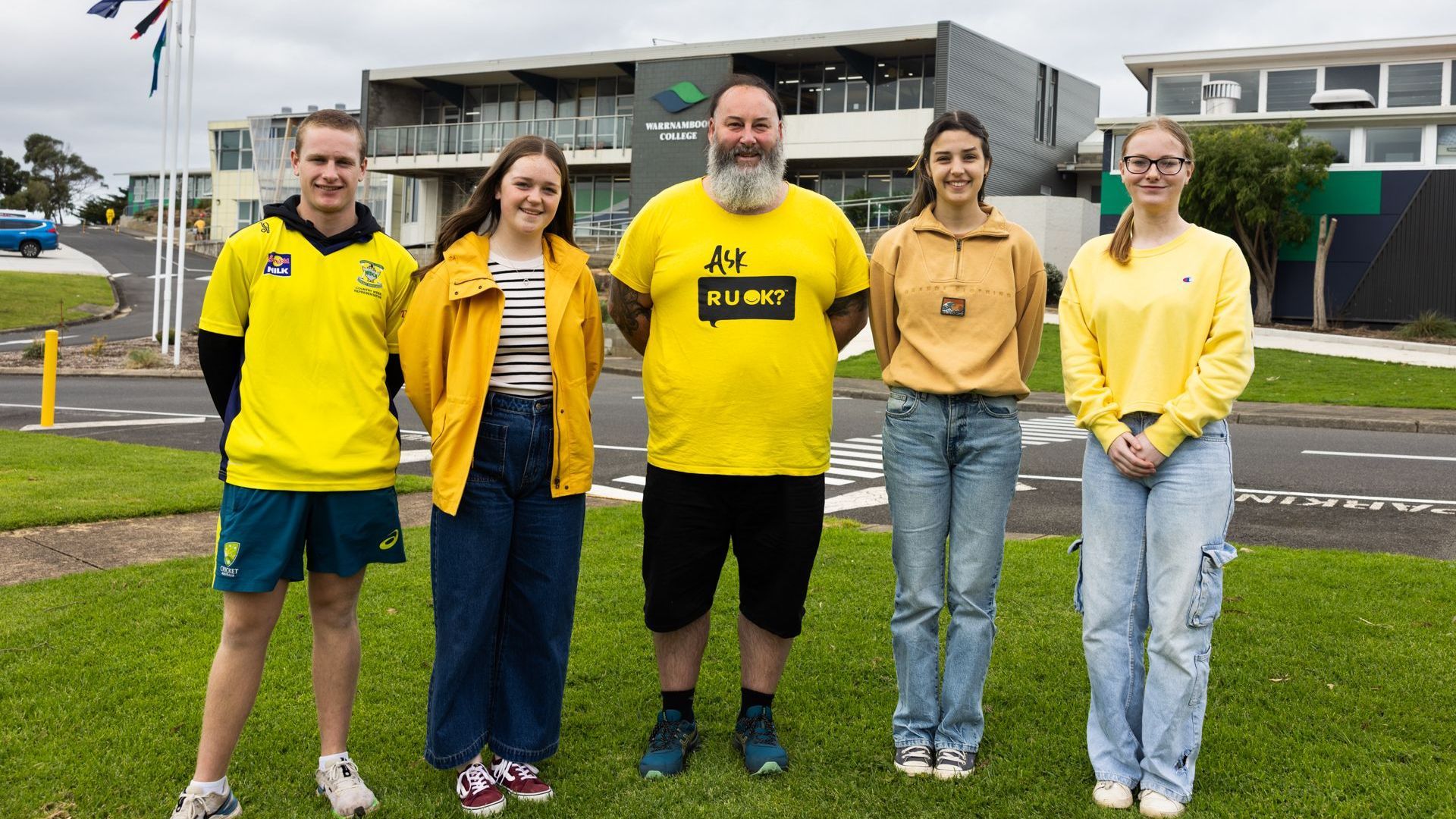
The College held an assembly where staff and students heard from year 12 student leaders Nyasha Iervasi and Zoe Borthwick, principal David Clift and ‘Ks for R U OK?’ Ambassador, Warrnambool’s Nathan McKane.
College captain Zoe Borthwick said R U OK? was a simple question that could “truly save a life” and encouraged kindness always.
“You never know what someone is going through behind closed doors, so I encourage you to remember how valuable and necessary kindness is, not only when we know someone who is struggling, but all the time,” Zoe said.
Cranbourne South Primary School (CSPS)
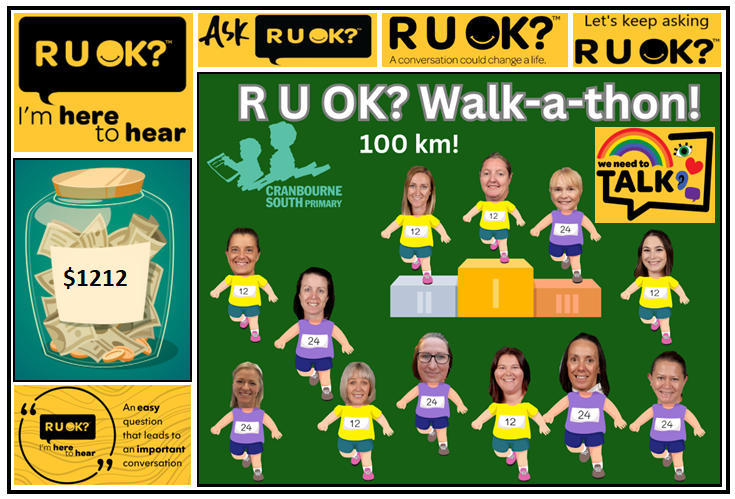
Staff at Cranbourne South Primary School challenged themselves to complete a 100km
walk-a-thon.
The staff wanted to walk to lead by example and demonstrate the connection between physical exercise and mental health.
The students also took part in a variety of classroom lessons from the R U OK? website.
St John's Primary School, Mitcham
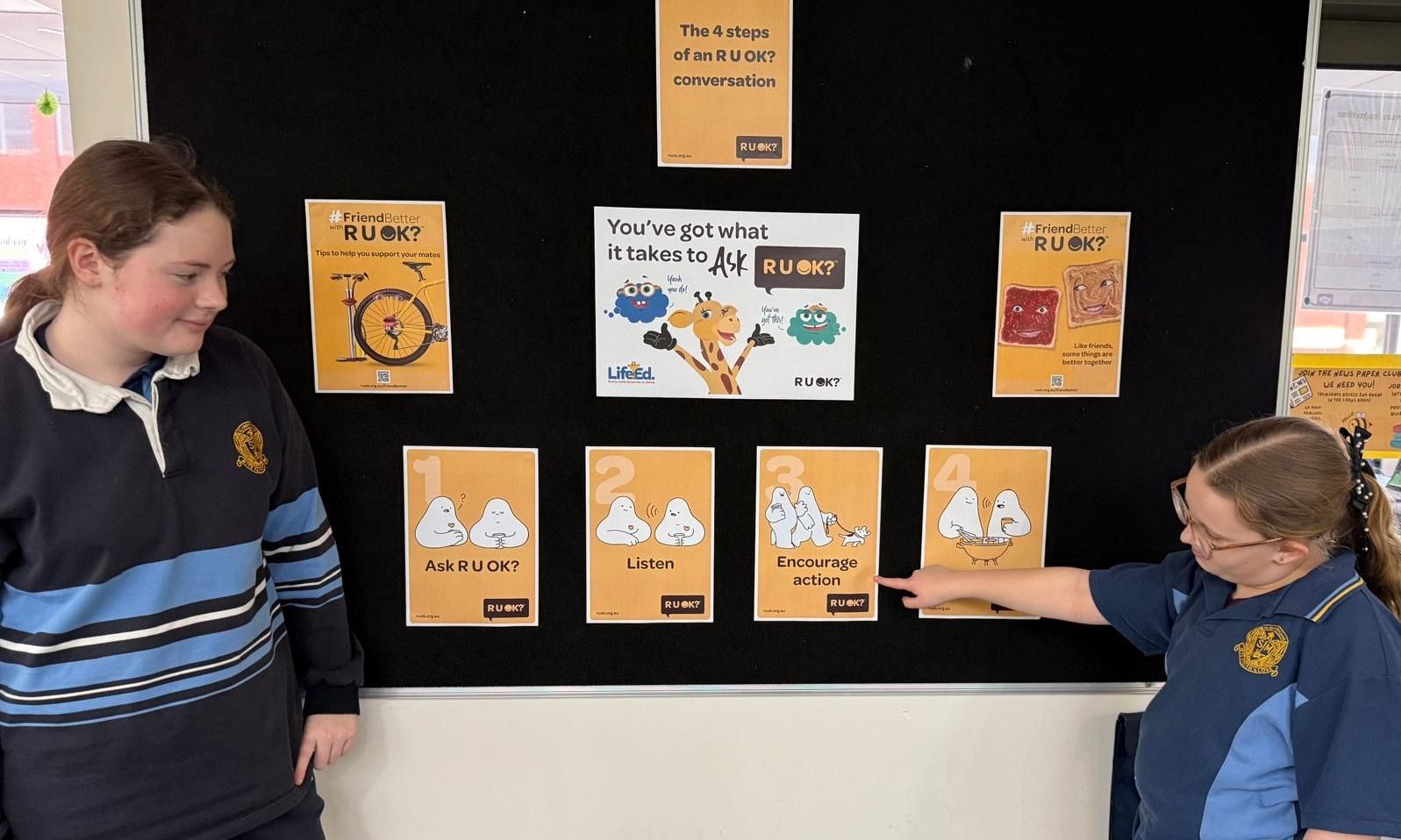
The R U OK? Primary Education resources are displayed year-round at St John's Primary School, Mitcham.
These include the 4-step ALEC conversation model, #FriendBetter posters, and ‘You’ve got what it takes to ask R U OK?’ poster.
Coonabarabran Public School
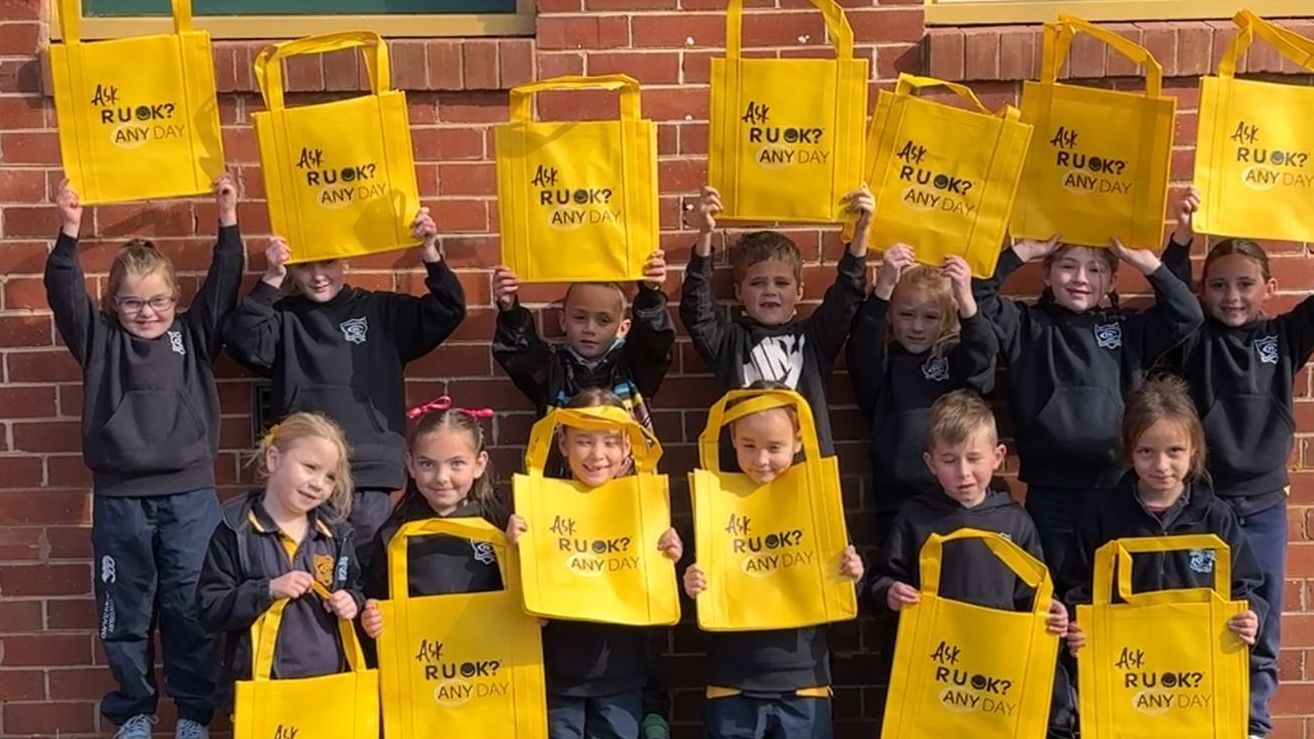
The students at Coonabarabran Public School use the R U OK? Tote bags as their school library bags.
It’s a great way to embed the R U OK? Any Day message in the school community.
Brookside College
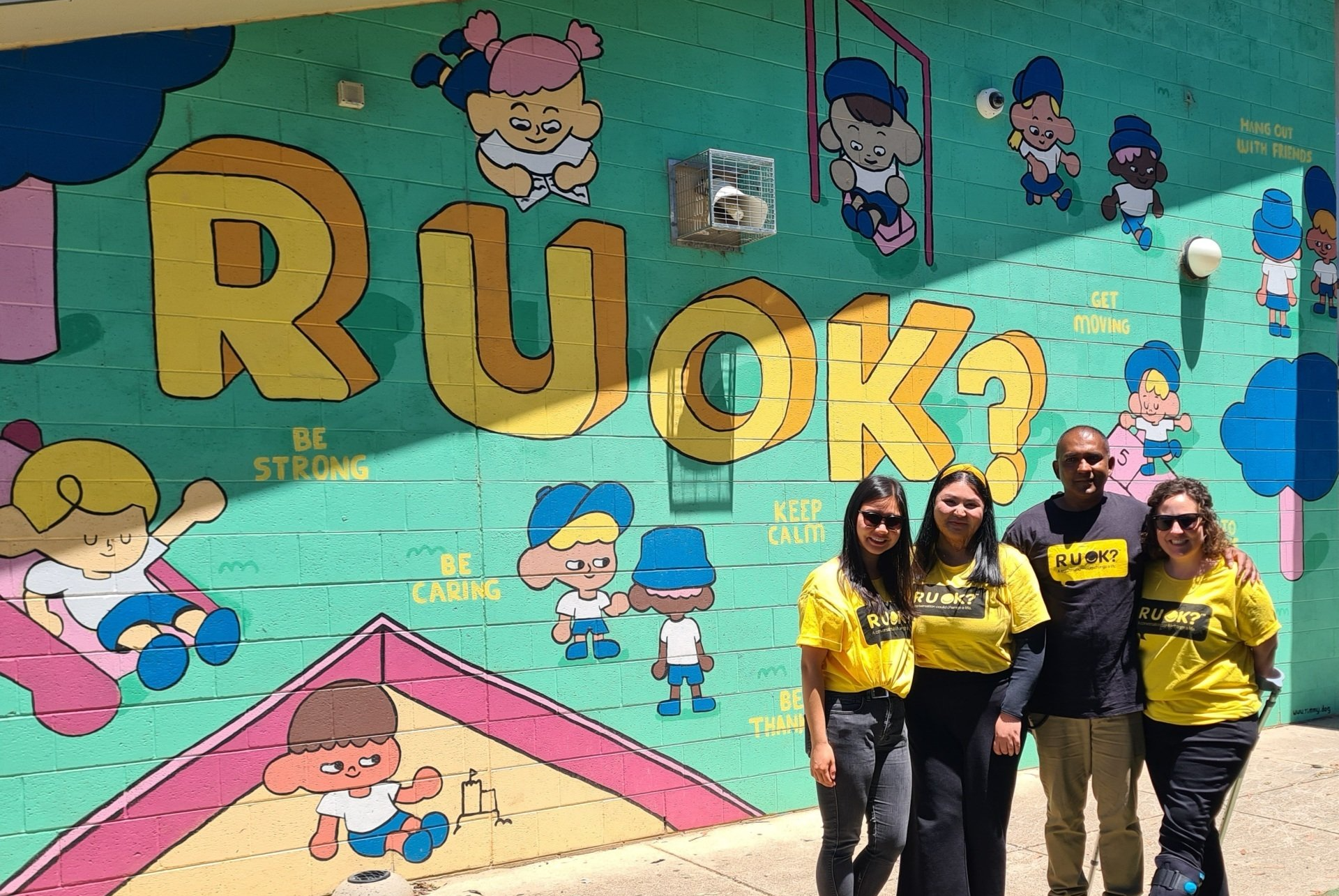
Local artist Tim Sta Ana designed and painted an R U OK? themed wall mural for Brookside College to mark R U OK?Day. Students contributed words of encouragement to add to the design. The mural features messages like, "be strong", "be caring", "keep calm" and "get moving". It now serves as a constant reminder for the students, staff and school community to continue asking, ‘are you OK?’, all year round.
In line with this project, students created their own pieces of artwork that express messages of seeking help, words of encouragement, and positive affirmations.
The wellbeing team led sessions that allowed students to role-play scenarios where they might notice signs someone could be struggling, and how to have a conversation with that person. Students also took part in daily wellbeing activities that addressed the four steps of an R U OK? Conversation (Ask, Listen, Encourage Action, Check In), as well as resilience building.
A range of R U OK? giveaways were provided to students, including bandanas, stickers, wristbands, erasers and fidget toys. There was also a photo booth, with R U OK?-themed printed film. At recess, Indigenous musical artist, Brett Lee, performed for the students.
Milton Public
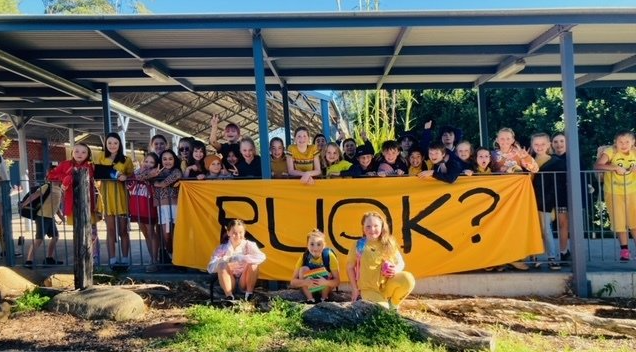
To mark R U OK?Day, students were encouraged to wear yellow and orange to school, which became a talking point in classrooms. Teachers conducted lessons based on lesson plans downloaded from the R U OK? Education website. Students also watched films exploring human emotions to help spark conversations about helping friends.
The school ran a free yoga class for staff in the morning and provided a free coffee van. Staff also had extra release time away from their classes so they could do their own work or meet colleagues for a cuppa and chat.
To encourage meaningful conversations, staff shared photos on the staff notice board of themselves partaking in wellbeing activities, such as going to the gym, enjoying dinner, horse riding, or surfing.
Tom Price Senior High School
The school used resources from the R U OK? Website for Secondary Schools, which encouraged students to check in and start conversations. The Student Services team prepared packs for teachers to use the day before R U OK?Day to help start meaningful conversations.
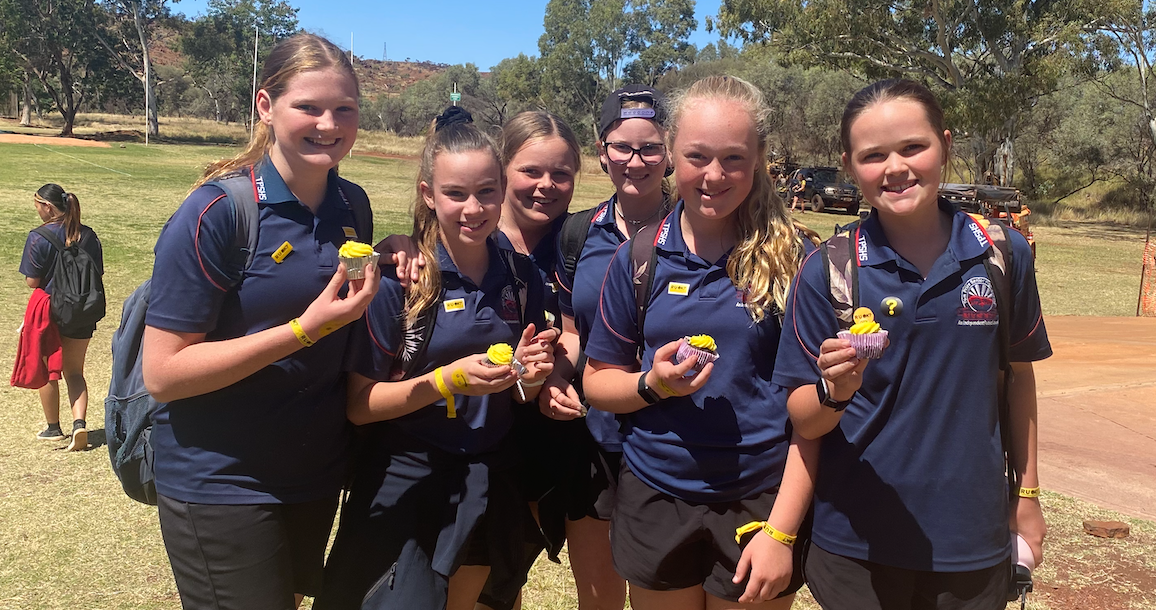
The morning of R U OK?Day was marked with themed activities including, a breakfast featuring yellow pancakes, R U OK? face painting, and merchandise giveaways. During this time, staff and students spoke about the importance of connection and supporting others. At lunchtime students were given a yellow iced cupcake with the R U OK? logo on top, supplied from R U OK? website.
Central Coast Grammar School
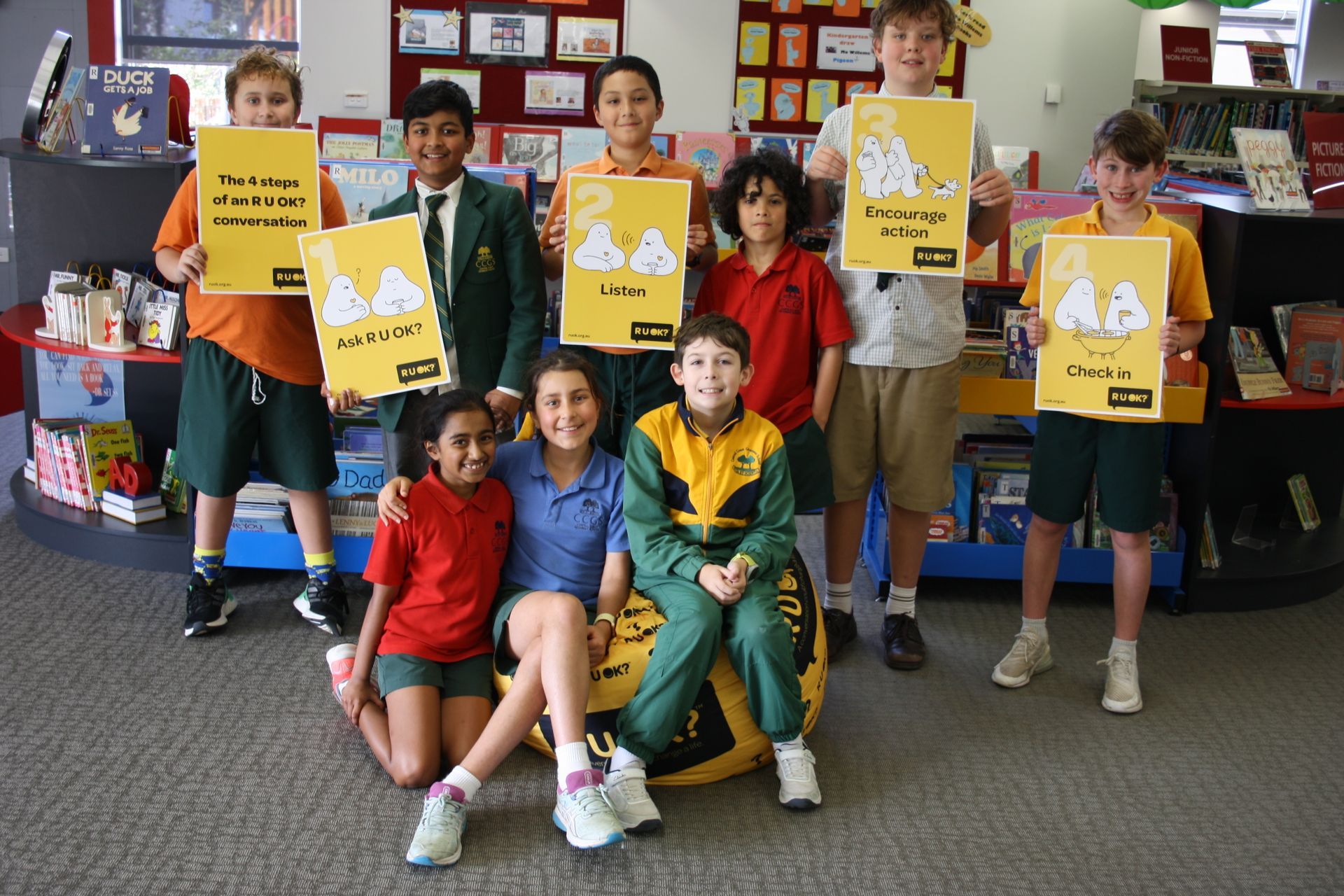
R U OK? activities and lessons were delivered, targeted to specific year groups. Messages about conversation and connection were shared on the school’s digital platform aimed at K to 6 and Years 7 to 12, with the content viewed nearly 3,000 times by students, staff and families.
R U OK? -themed signs and posters were displayed during the week on digital screens and monitors throughout the school.
The school also used social media to communicate key messages and involve students in the discussion. The ‘It doesn’t matter how you ask. Just ASK’ Instagram reel featured students saying, ‘Are you OK?’ in different languages - helping to show the community that it doesn’t matter how you ask the question, you just need to ask it.
A group of Year 9 students created another Instagram video outlining the four steps to an R U OK? Conversation (Ask, Listen, Encourage Action, Check In) in a short skit.
Emmaville Central School
Secondary students learned about R U OK?’s model for supporting others – ALEC, with a new step introduced each day during Multisensory Structured Language (MSL) lessons.
Ahead of R U OK?Day all students had the opportunity to enjoy a brownie and a hot chocolate, over conversation with a friend, which was a great opportunity to put their conversational skills to use.
The following week, all students participated in an out-of-uniform day, where they were invited to come dressed in yellow or bright colours and enjoyed a hot dog and popper, thanks to the school’s P&C.