R U OK? calls on Australia to reconnect to prevent suicide
Campaign videos here - http://bit.ly/2b6t6ND
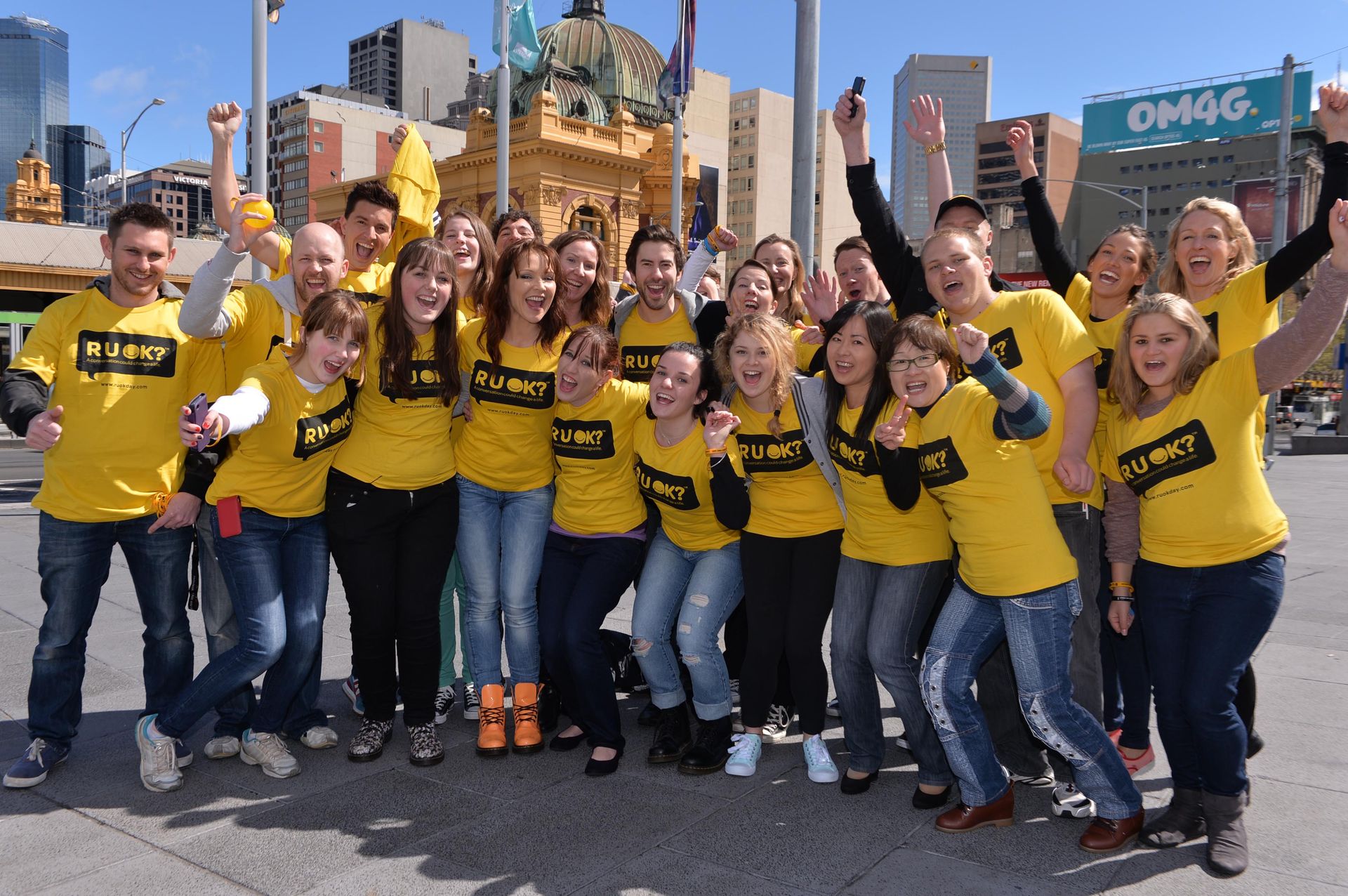
Today is R U OK?Day and R U OK? is calling on all Australians to reconnect with someone they’ve lost touch with, as new research from the suicide prevention charity reveals one third of us have unintentionally lost contact with four or more family members or friends.
Released on the 8th national day of action (Thursday 8 September), the research shows that 24 per cent of us have stopped talking with four to eight loved ones, and a further 10 per cent of us with nine or more people.
R U OK? Campaign Director Rebecca Lewis said that today’s the day to make a promise to change that.
“As a community and as individuals, we’re stronger together and it’s important that we make more time for the people we care about,” Rebecca said. “Use today as an opportunity to start a conversation with someone you were once close to, as well as reach out to anyone you’re worried about. Then, make a commitment to be there for one another throughout the year.”
Adding his voice to the call for regular, meaningful conversations between family and friends is Prime Minister Malcolm Turnbull.
“The more we talk, the more people are encouraged to seek help,” Prime Minister Turnbull said. “Checking in with each other is something we can all do to help those around us. So if you think someone you know might need help, ask the question: ‘Are you ok?’”
R U OK? Conversation Expert Professor Nick Glozier said we’ve all got what it takes to be there for one another – because it ultimately comes down to listening and not judging what someone wants to share.
“Once you start a conversation and a mate opens up, don’t rush in or leap to conclusions,” Nick said. “It’s important that you listen to what they have to say and guide the conversation with more open questions. Don’t try and fix their problems - or provide the answers - but help them to identify what they can do to better manage the load.”
For support at any time of day or night, call Lifeline on 13 11 14. For more info, visit ruok.org.au.
For media enquiries or interviews please contact:
Elizabeth Nash: [email protected] or 0412 934 643
Anna Kelly: [email protected] or 0400 967 048
Lisa Minner: [email protected] or 0421 623 387
Notes to Editors:
R U OK?
R U OK? is a not-for-profit organisation that aims to inspire and empower everyone to meaningfully connect with people around them and support anyone struggling with life. R U OK?Day is a national day of action, held on the second Thursday of September each year. But every day is the day to start a conversation. Conversation tips and crisis numbers can be found at ruok.org.au .
Partnerships
Principal Partner Hungry Jack’s is leveraging its vast retail network to promote the R U OK? message. Hungry Jack’s Marketing Manager, Rachel Korbel said, “Hungry Jack’s looks forward to helping R U OK? connect with Australians, including 17,000 Hungry Jack’s staff, to spread the word about the importance of having regular, meaningful conversations.”
Conversation Partner Virgin Mobile Australia will be offering its customers free calls within Oz on R U OK?Day. CEO David Scribner said, “We’re proud to be partnering with R U OK? to champion the power and importance of conversation – not just on R U OK?Day, but every day. We want to remind people to pick up the phone to check in with a friend or loved one more regularly – a call really could make a difference to that person’s day.”
Digital Partner Sensis has designed and built the new R U OK? website, ruok.org.au, so more people can find tips to start a conversation. CEO John Allan said, “Sensis is delighted to come on board as R U OK?’s digital partner, with the relationship proving to be a true partnership. The new website will help anyone wanting to reach out to a friend, loved one or acquaintance to start a potentially life-changing conversation.”
For tips on how to report sensitively and accurately on suicide, please visit:
http://www.mindframe-media.info/for-media
Summary of research findings:
Respondents reported that they’d unintentionally lost contact with the below numbers of really close friends, family or colleagues, even though they wish they hadn’t:
- None – 26%
- 1 - 3 people – 40%
- 4 - 8 people – 24%
- 9 - 15 people – 6%
- More than 15 people – 4%
Respondents reported that they’d met the people they’d lost in the following places:
- Primary or high school – 49%
- University, TAFE or similar – 28%
- Worked together – 48%
- Lived in the same neighbourhood – 27%
- Families were friends – 22%
- Were related – 15%
- Other – 6%
The research was conducted on behalf of R U OK? by Colmar Brunton and via the Colmar Brunton and Your Source Omnibus, which interviews a nationally representative sample of 1,000 Australian adults (aged 18+) weekly. It excludes people who’ve participated in the previous three weeks and data is post weighted to ABS proportions. The margin of error associated with the results is +/- 3.0%.