R U OK? calls on Gympie to Trust the Signs someone might be struggling with life
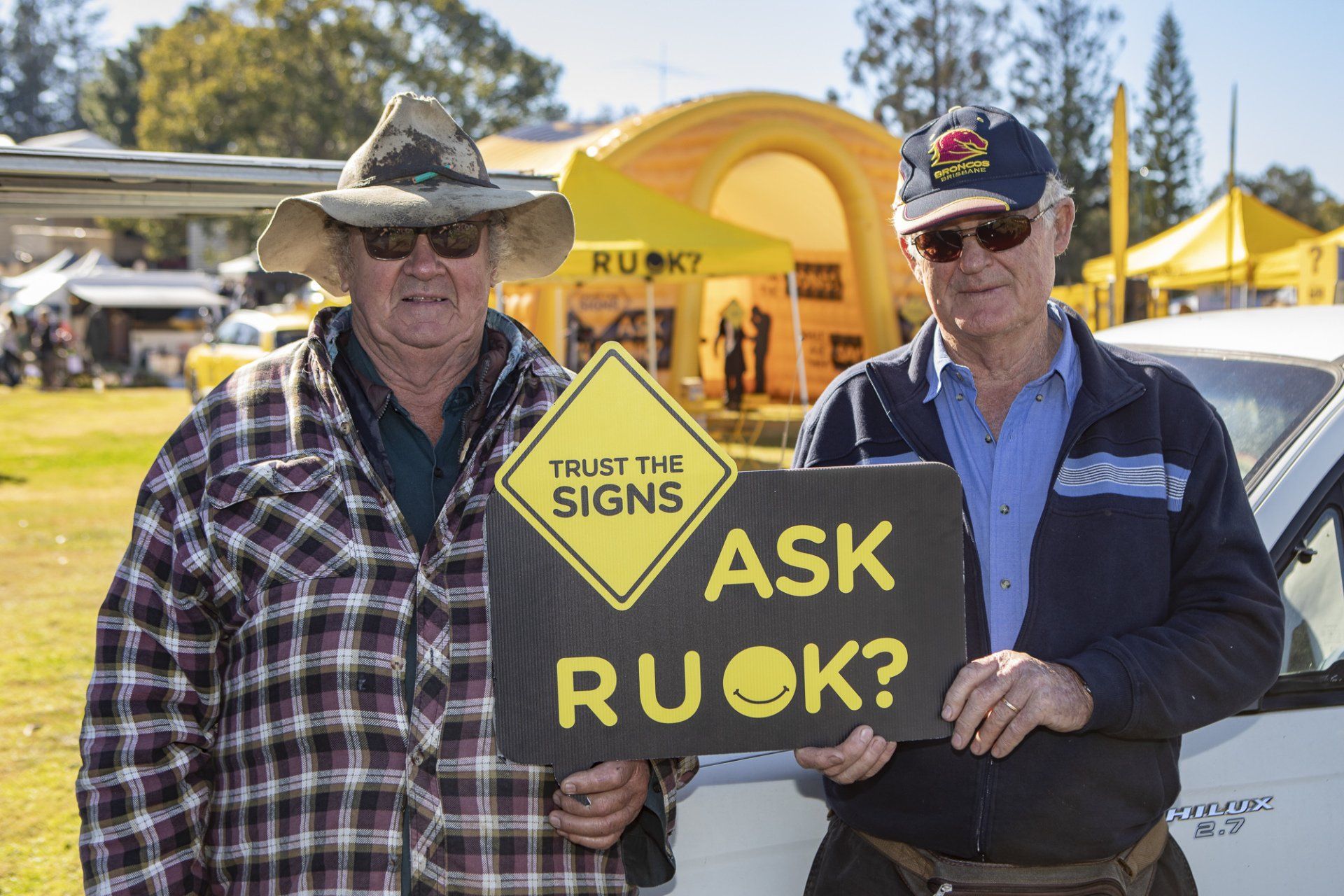
The nationwide R U OK? ‘Trust the Signs Tour’ visited Gympie on Sunday 21 July joining R U OK? Community Ambassadors and local mental health support services for an event designed to educate the local community on when and how to start a conversation that could change a life.
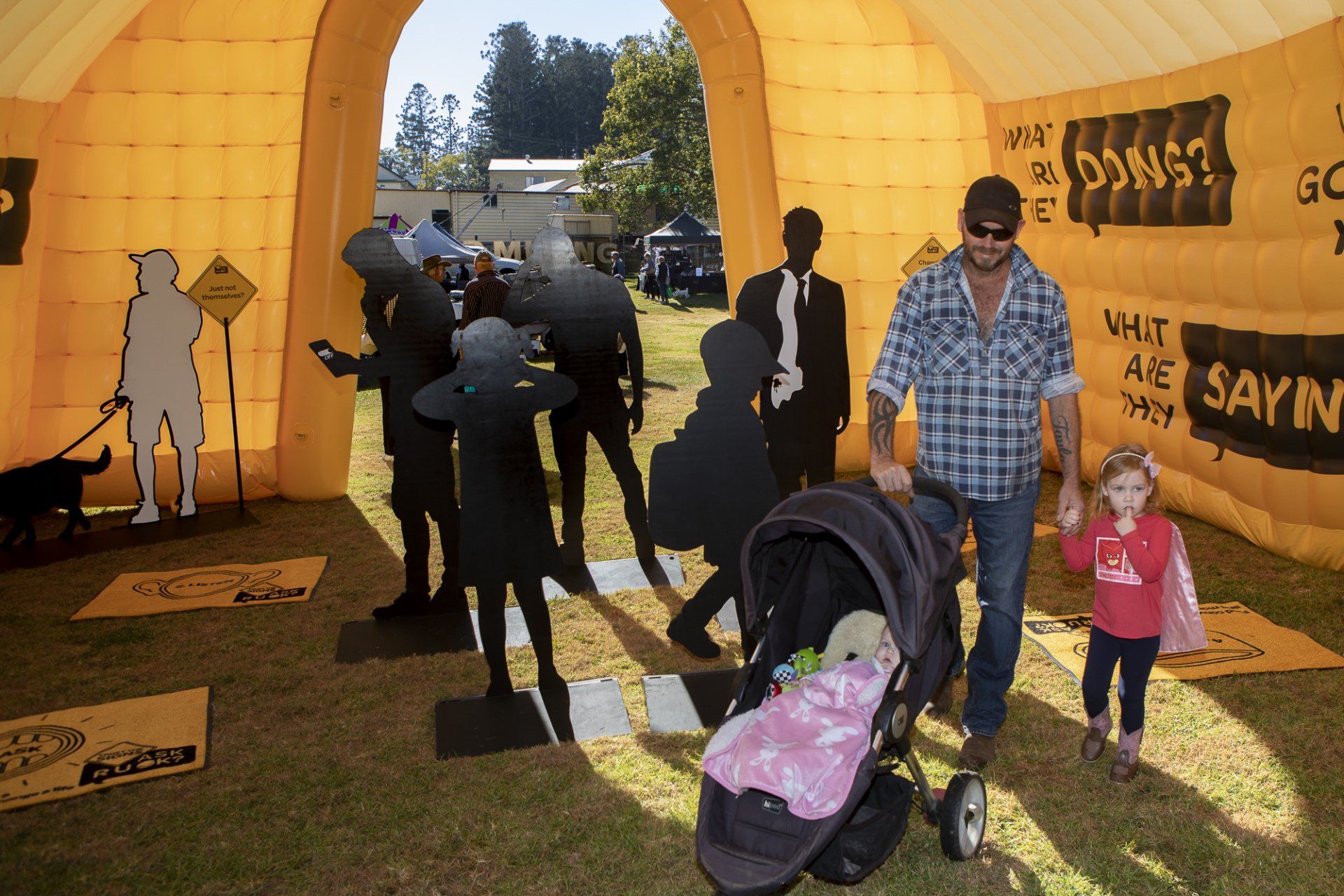
At the Gympie Museum Markets the Tour's bright yellow tent provided an educational experience that showed what someone might be saying or doing and what might be going on in their life when they're struggling.
The ‘Trust the Signs Tour’ comes in the wake of research released by R U OK? that found nearly two-thirds of Australians (63%) are not confident they know the signs that someone might be struggling with life. Of those surveyed, 41% hadn’t asked someone if they were OK because they weren’t surethey knew the signs. However, there is hope, with almost 1 in 2 (49%) believing they’d be more confident starting a conversation if they knew the signs.
The Tour is travelling around 14,000 kilometres visiting every state and territory and engaging 24 communities to help build Australians confidence to 'Trust the Signs, Trust your Gut and Ask R U OK?'.
R U OK? CEO Katherine Newton says the Tour can help people recognise when someone might be struggling.
“We know the majority of Australians believe talking to someone who’s struggling can make a difference. But what we’re hearing, is that people aren’t sure when the right time is to have an R U OK? conversation,” said Newton. “Signs can be subtle changes in verbal or non-verbal behaviour. A loved one might tell you they’re having difficulty switching off or a mate might be withdrawing from social situations like not turning up to training. We’re encouraging people to look out for those cues. We can also make a conscious effort when we know someone is going through a significant life change such as job loss, relationship breakdown, study pressure or perhaps becoming a parent.”
“By taking the‘Trust the Signs Tour’ around Australia, we hope to empower people to trust their gut instinct and ask the question as soon as they spot the signs that someone might be struggling with life,” she said.
This is the sixth consecutive year R U OK? has hit the road. This year the Tour is stopping in two dozen communities that have reached out for an R U OK? visit. As in previous years, each event will feature R U OK? Ambassadors, a free community BBQ, activities for all ages and entertainment.
The ‘Trust the Signs Tour’ will complete its journey in Sydney on 12 September to coincide with R U OK?Day, a national day of action marked with events around the country.
Ambassadors, including Barry Du Bois, Travis Collins, Barry Conrad, Tom Derickx, Casey Donovan, Bianca Dye, Chris Green, Bruce ‘Hoppo’ Hopkins, Rachel Lynch, Miguel Maestre, Ben Ross and Steve ‘Commando’ Willis, have thrown their support behind the ‘Trust the Signs Tour’.
R U OK? is encouraging all Australians to learn the signs, download a practical toolkit and start regular meaningful conversations throughout their communities when its needed.
More information on how to get involved can be found at: ruok.org.au For support at any time of day or night, call Lifeline on 13 11 14.
ENDS
NOTES TO EDITORS:
For more information please contact:
• Neha Lokesh: e: [email protected], m: 0470 580 215
• Hannah Evans: e: [email protected], m: 0424 083 499
• Annabel Bowman: e: [email protected], m: 0411 084 18
About the R U OK? Trust the Signs Tour:
R U OK? are calling on Australians to Trust the Signs that someone might be struggling with life.
• R U OK? will take the Trust the Signs message to every state and territory in the build-up to R U OK?Day (Thursday 12 September).
• The Trust the Signs Tour will involve an educational experience where people can learn more about the signs someone may be struggling with life. Inside a giant installation people can interact with life-size silhouettes and signposts to guide them through what might be going on in someone’s life and what they might say or do if they’re struggling.
• The Trust the Signs Tour will travel around 14,000 km, engaging with 24 communities before completing its journey in Sydney on R U OK?Day.
• On R U OK?Day – our national day of action - R U OK? will remind Australians to Trust the Signs, Trust your Gut and ask, “Are you OK?” of anyone who may be struggling with life.
R U OK? wish to thank the Trust the Signs Tour partners: Liptember, Flight Centre Foundation, Twinings, Audi Foundation, Top Parks and Virgin Australia.
About R U OK?
• R U OK? is a not-for-profit organisation that aims to inspire and empower everyone to meaningfully connect with people around them and support anyone struggling with life.
• R U OK?Day is a national day of action, held on the second Thursday of September each year. But every day is a day to start a conversation.
• Conversation tips and crisis support contacts can be found at www.ruok.org.au/findhelp